Choosing the Right Decking Material for Your Project: A Trade Guide
Outdoor living spaces have become one of the fastest-growing areas of the construction and renovation industry. Modern homes and commercial spaces increasingly feature open-plan living areas that flow into outdoor entertainment spaces, pool surrounds, patios and landscaped areas.
From residential decks and high-end homes to restaurants, lodges, hospitality projects and commercial developments, quality decking has become an essential feature in modern design.
For builders, timber merchants, architects, developers and contractors, choosing the right decking material involves far more than appearance. Performance, durability, maintenance requirements, availability, installation, budget and long-term value all play a critical role in delivering a successful project.
At Saplings Timber Trading, we understand that every decking project has unique requirements and every customer has their own preferred finish. Understanding the strengths, limitations and long-term performance of each decking option helps trade customers select the right material for the application.
Blog quick read:
The best decking material depends on the environment, expected foot traffic, maintenance requirements, budget and desired appearance. CCA H3-treated South African Pine is a practical and cost-effective option for residential decks, while hardwood species such as Garapa, Balau, Massaranduba and Jatoba provide greater durability for premium and high-traffic projects. Thermally modified timber and engineered bamboo offer modern, lower-maintenance alternatives. Correct installation, drainage, ventilation and ongoing maintenance are essential for extending the lifespan of any deck.

Why Decking Material Selection Matters
Decking is constantly exposed to some of the harshest environmental conditions. Sun, rain, temperature fluctuations, moisture and heavy foot traffic all take their toll over time.
Choosing the wrong decking material can result in:
Excessive movement
Cracking or checking
Warping
Fading
Moisture damage
Premature replacement
Costly callbacks
Dissatisfied clients
The best decking solution depends on several factors:
The environment in which it will be installed
Whether the project is inland or coastal
Expected foot traffic
Maintenance expectations
Available budget
Desired colour and appearance
Long-term performance
Residential or commercial use
Sustainability requirements
There is no single decking product that suits every application. The key is understanding where each decking material performs best.
South African Pine Decking
South African Pine remains one of the most widely used decking materials in South Africa, particularly where cost-effectiveness is an important consideration.
When properly pressure-treated and installed correctly, Pine offers excellent value for residential projects, entertainment areas, garden applications and larger residential developments.
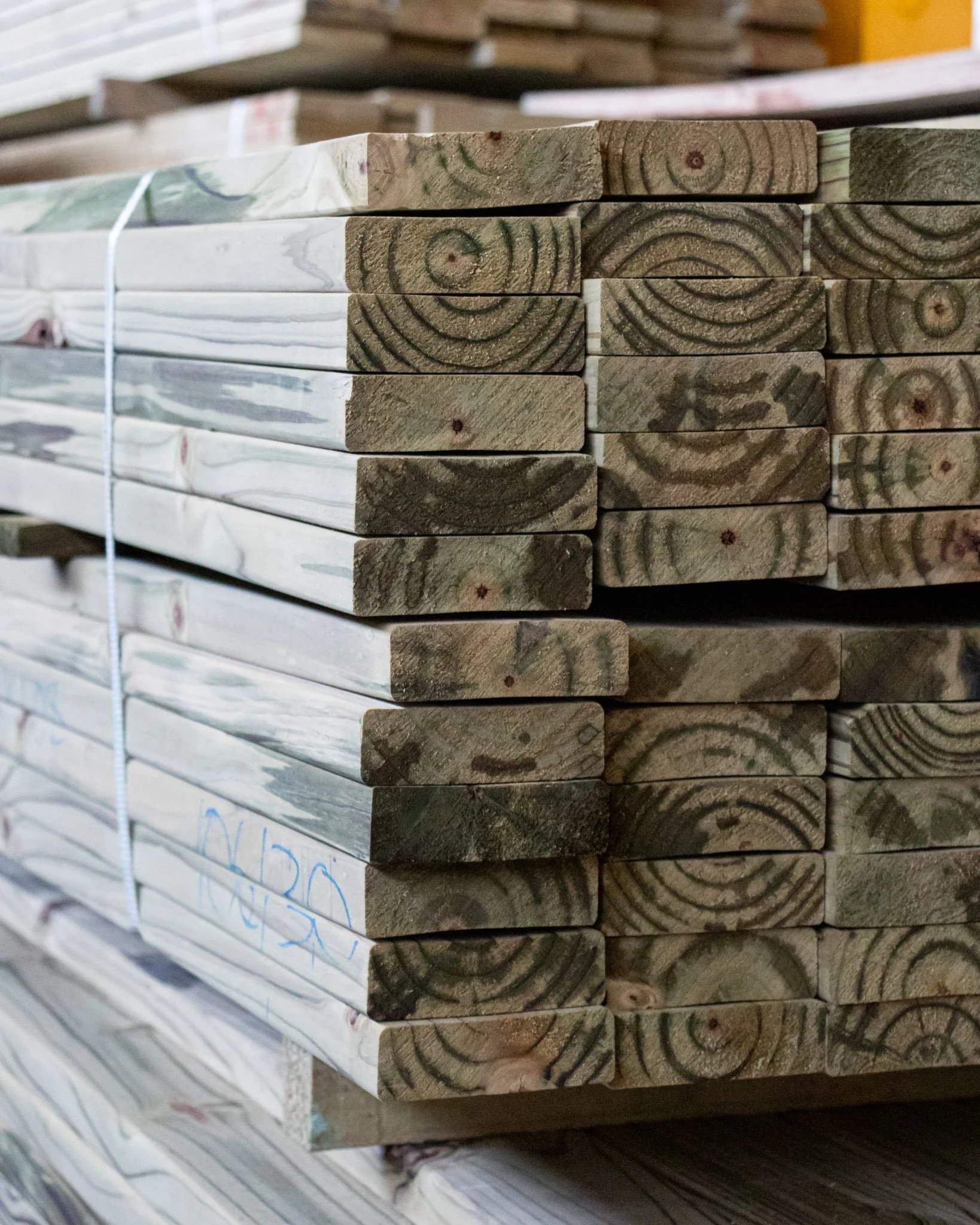
At Saplings Timber Trading, our in-house manufactured South African Pine decking is supplied with CCA H3 pressure treatment for exterior above-ground applications.
Advantages of South African Pine Decking
Competitive pricing
Readily available
Easy to machine and install
Accepts stains, oils and finishes well
Sustainably grown in commercial plantations
Suitable for residential outdoor areas
Ideal for large developments and bulk decking supply
Considerations
Because Pine is a softwood, it requires regular maintenance to preserve its appearance and maximise its lifespan. Periodic cleaning, sealing or oiling is essential, particularly in coastal regions where moisture and salt exposure can accelerate weathering.
For customers looking for an affordable and attractive decking solution, CCA-treated Pine decking continues to deliver outstanding value.
South African Pine Decking Stock Sizes
All stocked South African Pine decking is CCA H3 pressure-treated:
21 x 44mm SAPD – Smooth
21 x 70mm SAPD – Smooth
21 x 108mm SAPD – Smooth or reeded on one side
21 x 144mm SAPD – Smooth
32 x 108mm SAPD – Smooth
32 x 144mm SAPD – Smooth
Stock lengths range from 1.2m to 4.8m in increments of 0.3m. Special sizes may be made to order upon request.
Hardwood Decking
Hardwood remains the premium decking choice for many architects, property developers, contractors and high-end residential projects.
Species such as Balau, Garapa, Massaranduba and Jatoba are known for their exceptional density, natural durability, strength and long service life.
These hardwood decking species perform particularly well in demanding environments where durability, appearance and long-term value are essential.
Advantages of Hardwood Decking
Exceptional durability
High resistance to wear
Good dimensional stability
Rich natural appearance
Long service life
Suitable for high-traffic areas
Suitable for heavy commercial use
Naturally resistant to insects and decay
Hardwood decking generally requires a higher initial investment and can be more challenging to machine because of its density. Installation may take longer, and specialist tools, sharp equipment and experienced installers may be required.
However, for premium developments where longevity and appearance are prioritised, hardwood decking often proves to be a worthwhile investment over the life of the project.
Understanding the Differences Between Hardwood Decking Species
While hardwood decking is often grouped into a single category, each species offers different characteristics that make it more suitable for certain projects.
The following factors should be considered when comparing hardwood decking:
Density
Colour
Natural durability
Dimensional stability
Workability
Maintenance
Availability
Cost
At Saplings Timber Trading, we stock a range of premium hardwood decking species, each offering its own strengths.
Garapa Decking
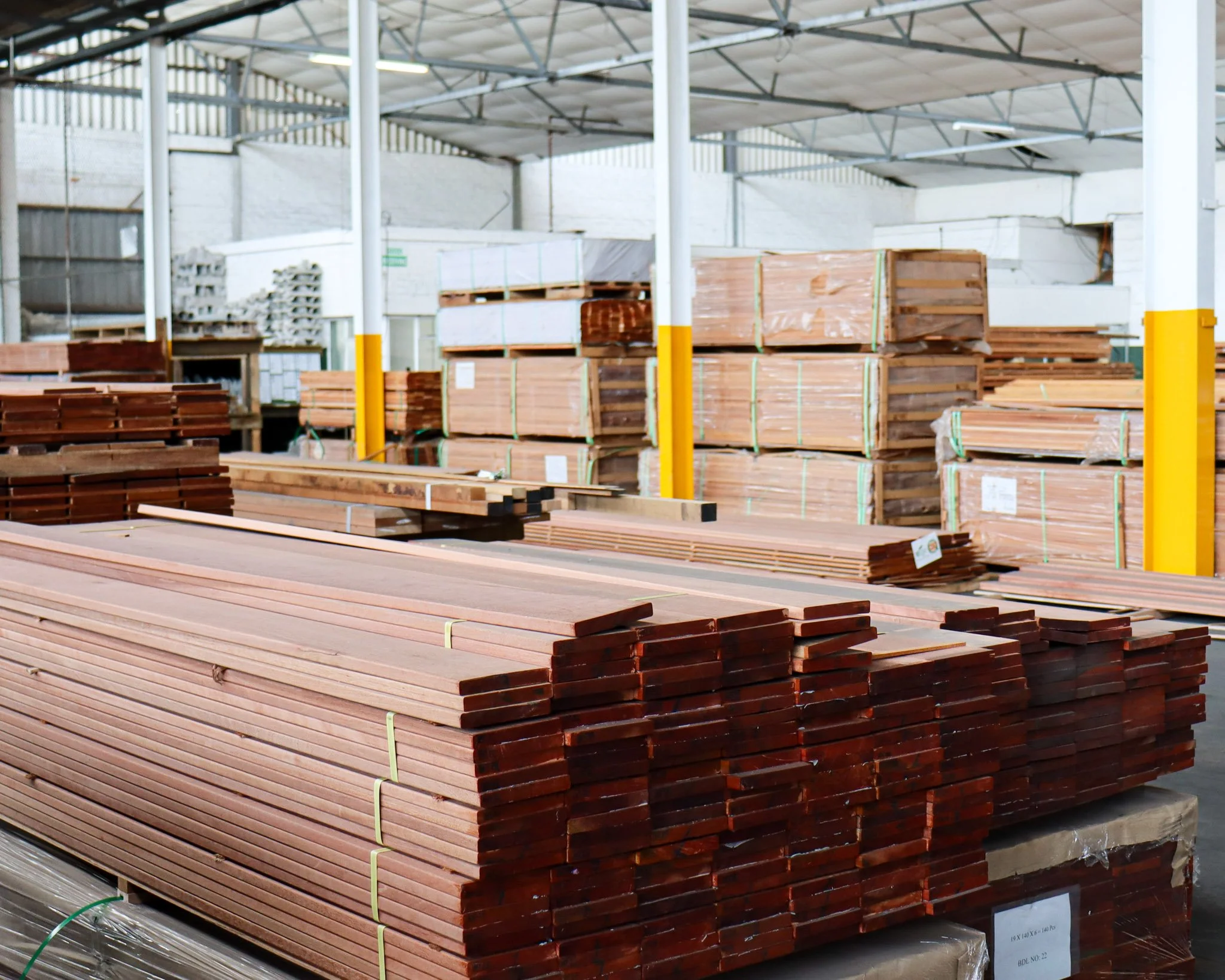
Garapa is a South American hardwood that has become increasingly popular for high-end residential and commercial decking.
It is easily recognised by its light golden to honey-coloured appearance, creating a bright, contemporary finish that complements modern architectural designs.
Despite its lighter colour, Garapa is exceptionally durable and naturally resistant to decay, insects and weathering. It is slightly easier to machine and install than some denser tropical hardwoods, making it a popular choice among contractors and installers.
Left untreated, Garapa will gradually weather to an attractive silver-grey colour. Regular oiling helps retain its warm golden tones.
Botanical name: Apuleia leiocarpa
Trade name: Garapa
Garapa Stock Sizes
19 x 90mm – Smooth
19 x 140mm – Smooth
19 x 40mm – Available upon request
Stock lengths range from 0.9m to 6.1m in increments of 0.3m, subject to availability.
Balau Decking
Balau has earned a reputation as one of the most trusted hardwood decking species in Southern Africa.
Its rich reddish-brown colour, excellent durability and proven performance make it a preferred choice for residential and commercial decking applications.
With its high density and natural resistance to moisture, fungal decay and insect attack, Balau performs exceptionally well in harsh outdoor environments, including coastal regions.
It has long been specified for:
Boardwalks
Public walkways
Residential decks
Commercial decks
High-traffic outdoor areas
Coastal projects
Although its density provides outstanding strength, installers should expect a more challenging installation process. Balau can also be slightly less stable than Garapa, making correct installation and suitable fixings especially important.
Botanical name: Bangkirai
Trade name: Balau
Balau Stock Sizes
19 x 90mm – Reeded on one side
19 x 140mm – Smooth
Stock lengths range from 1.8m to 4.8m in increments of 0.3m.
Massaranduba Decking
Often referred to as one of the toughest decking timbers available, Massaranduba is prized for its exceptional hardness, strength and longevity.
Its deep reddish-brown colour creates a luxurious finish that matures beautifully over time.
Massaranduba is highly resistant to wear, making it ideal for areas exposed to constant foot traffic. Its density can also provide good dimensional stability when the timber is stored, machined and installed correctly.
However, that same density makes Massaranduba one of the more difficult hardwood species to machine and install. Quality tools, sharp blades, pre-drilling and careful workmanship are important.
For clients seeking a long service life and a premium hardwood finish, Massaranduba remains one of the industry’s leading decking choices.
Botanical name: Manilkara bidentata
Trade name: Massaranduba
Massaranduba Stock Sizes
19 x 90mm – Smooth
Stock lengths range from 1.8m to 6.1m in increments of 0.3m, subject to availability.
Jatoba Decking
Jatoba, commonly known as Brazilian Cherry, is highly regarded for its striking colour variation and outstanding mechanical strength.
Freshly machined boards display warm reddish-orange tones that gradually deepen into a rich reddish-brown as the timber matures.
Beyond its visual appeal, Jatoba offers excellent hardness, durability and resistance to everyday wear, making it suitable for both interior and exterior applications.
Although Jatoba machines well when sharp equipment is used, its density requires proper installation techniques similar to other tropical hardwoods.
Architects and designers often specify Jatoba where appearance is just as important as structural performance. It is one of the less stable hardwood decking options, but correct installation, appropriate spacing and ongoing maintenance can help manage movement.
Botanical name: Hymenaea courbaril
Trade name: Jatoba
Jatoba Stock Sizes
19 x 140mm – Smooth
Stock lengths range from 1.8m to 6.1m in increments of 0.3m, subject to availability.
Saligna Decking
Unlike imported tropical hardwoods, Saligna is grown locally in South African plantations. This makes it an attractive option for customers looking for a locally sourced and cost-effective hardwood solution.
Saligna offers good strength and versatility and is widely used throughout the construction and manufacturing industries.
Its lighter density makes Saligna easier to machine, cut and install than many tropical hardwoods, which can help reduce labour time during installation.
Checking and cracking may occur when the timber is not correctly dried, stored, installed or maintained.
For customers balancing budget, sustainability and performance, Saligna offers good value while supporting the South African forestry industry.
Botanical name: Eucalyptus grandis
Trade name: Saligna
Saligna Decking Sizes
Saligna decking is not normally stocked but can be made to order upon request:
21 x 96mm
21 x 140mm
Stock lengths are generally shorter, ranging from approximately 1.8m to 3.6m, subject to availability.
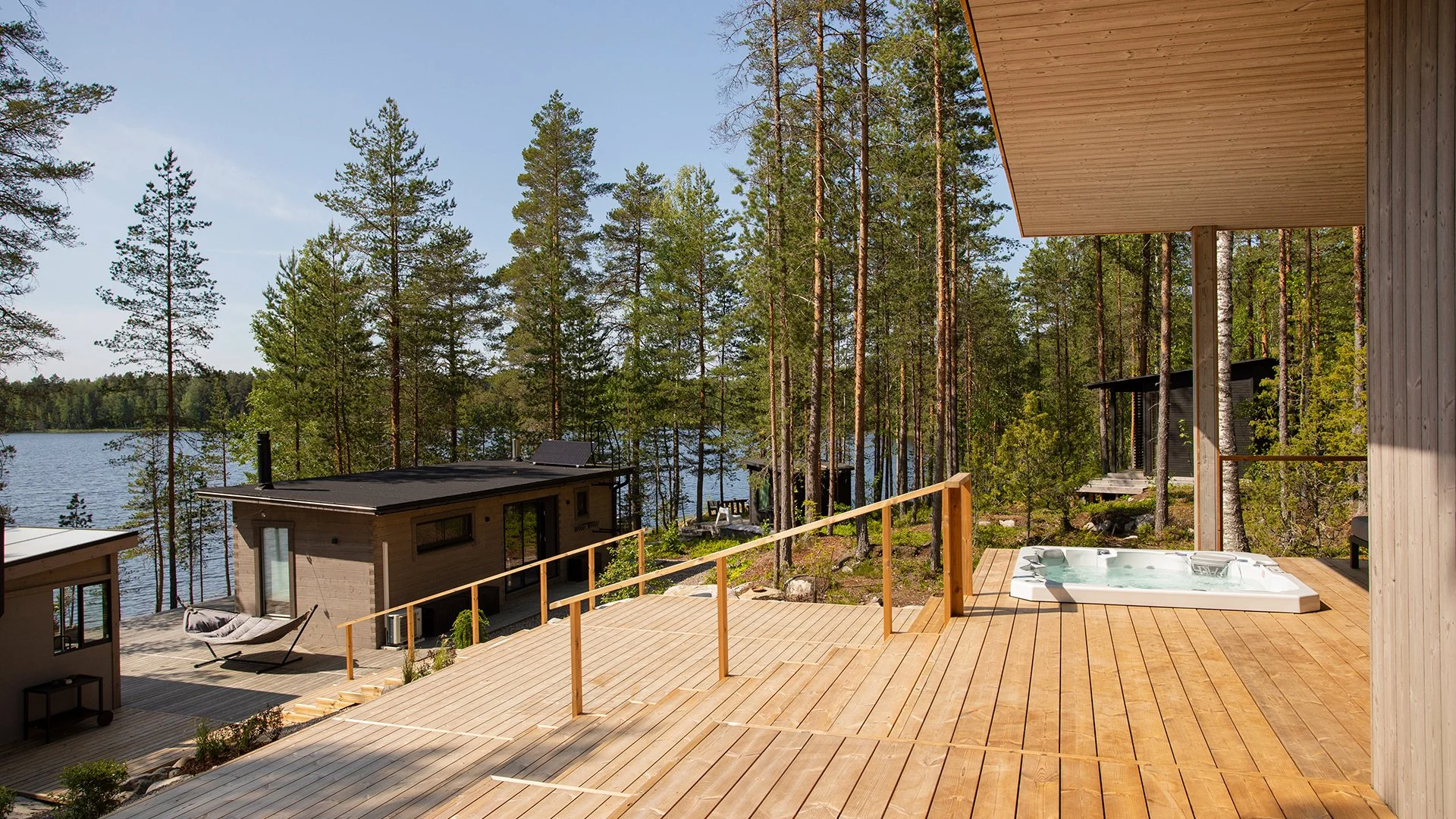
Thermally Modified Timber Decking
Thermally modified timber, also known as ThermoWood, has gained popularity internationally and is attracting increasing interest in the South African decking market.
Through a specialised heat-treatment process, the cellular structure of the timber is altered without the use of traditional chemical preservatives.
This significantly improves dimensional stability while reducing the timber’s tendency to absorb moisture and its susceptibility to fungi and insects.
Advantages of Thermally Modified Timber
Improved dimensional stability
Reduced movement
Good durability
Attractive natural colour
Chemical-free thermal modification process
Lower moisture absorption
Lower maintenance than untreated softwood
Suitable for modern architectural projects
Thermally modified timber offers a strong balance between appearance and performance. Although it carries a higher initial price, the improved stability and longevity can provide long-term value.
Lunawood Thermo Spruce Profix 2
Stock size:
26 x 140mm – Brushed
Stock lengths range from 3.0m to 5.1m in increments of 0.3m, subject to availability.
Bamboo Decking
Although technically a grass rather than timber, engineered bamboo decking has become an increasingly popular alternative for residential and commercial developments.
Modern manufacturing processes produce an exceptionally dense decking board with good durability, stability and consistent quality.
Advantages of Bamboo Decking
Fast-growing, sustainable raw material
High density
Modern appearance
Excellent hardness
Good weather resistance
Consistent manufactured quality
Suitable for residential and commercial applications
Bamboo decking is particularly appealing to environmentally conscious clients seeking alternative building materials without compromising on performance or appearance.
Dasso Bamboo Decking
CTECH:
Reddish-brown colour
20 x 137mm
Available in 1.85m and 3.05m lengths
XTR:
Dark brown to black colour
20 x 137mm
Available in 1.85m lengths
Decking Maintenance: Protecting Your Investment
Regardless of the decking material selected, proper installation and routine maintenance remain essential.
Natural timber decking maintenance should include:
Regular cleaning to remove dirt and organic matter
Ensuring adequate drainage beneath the deck
Maintaining suitable airflow and ventilation
Preventing long-term moisture build-up
Reapplying protective decking oils or coatings where required
Inspecting fasteners and structural supports periodically
Replacing damaged boards when necessary
Following the supplier’s installation and maintenance guidelines
A well-maintained deck will last longer and continue to improve the value, appearance and usability of the property.
How to Choose the Right Decking for Your Customer
As a timber merchant, builder or contractor, one of the greatest values you can offer your customers is sound product advice.
Before recommending a decking material, consider asking:
Is the project residential or commercial?
Is the property inland or coastal?
Will the decking be exposed to full sun or regular moisture?
What level of maintenance is the customer willing to perform?
Is the priority appearance, longevity or budget?
What level of foot traffic will the deck experience?
Does the project require locally grown or sustainably sourced materials?
Is a light, dark, golden or reddish-brown finish preferred?
Does the installer have the equipment required for dense hardwood?
Are specific board widths or long lengths required?
Understanding these requirements allows you to recommend the most suitable decking solution rather than simply selecting the least expensive option.
Wholesale Decking Supply from Saplings Timber Trading
Choosing the right decking material is only part of the equation. Working with a reliable wholesale timber supplier is equally important.
Consistent stock availability, dependable quality and knowledgeable product support allow timber merchants, contractors, builders, architects and developers to complete projects on time and with confidence.
At Saplings Timber Trading, we supply quality decking, structural timber and building products for South Africa’s construction, manufacturing and retail industries.
Our decking range includes:
CCA H3-treated South African Pine decking
Garapa hardwood decking
Balau hardwood decking
Massaranduba hardwood decking
Jatoba hardwood decking
Saligna decking made to order
Lunawood thermally modified timber
Dasso engineered bamboo decking
We understand that our wholesale and trade customers depend on reliable timber supply, consistent grading, machining options and professional service to keep their own businesses moving.
Contact the Saplings Timber Trading team in Cape Town for decking stock availability, bulk orders, trade pricing and product advice for your next residential, commercial or hospitality project.
Written by Johan Olivier