Thermally Modified Timber: Benefits, Uses and Lunawood Thermo-D
Timber has been used as a building material for centuries, but modern technology is finding new ways to improve its performance while retaining the natural beauty and character of real wood.
One of these technologies is thermal modification.
Thermally modified timber, also known as thermo-treated timber, is produced by carefully heating wood under controlled conditions. The process permanently changes certain properties of the timber, reducing moisture uptake and improving dimensional stability. This makes thermally modified wood particularly attractive for exterior timber applications, including decking, cladding, pergolas and architectural features.
At Saplings Timber Trading, we stock Lunawood ThermoWood®, a premium thermally modified Nordic softwood that combines the natural appearance of timber with the performance benefits achieved through the controlled ThermoWood® modification process.
Blog quick read:
What is thermally modified timber? Thermally modified timber is wood that has been treated using controlled high temperatures to alter its relationship with moisture, improve dimensional stability and enhance durability without adding chemical preservatives.
Lunawood Thermo-D is manufactured from Nordic softwood, primarily pine and spruce, and thermally modified at temperatures reaching 212°C. The process results in a final moisture content of approximately 4–7%.
The result is a stable, natural timber suitable for both interior and exterior applications such as timber decking, timber cladding, pergolas, screens, privacy walls, soffits and architectural features.
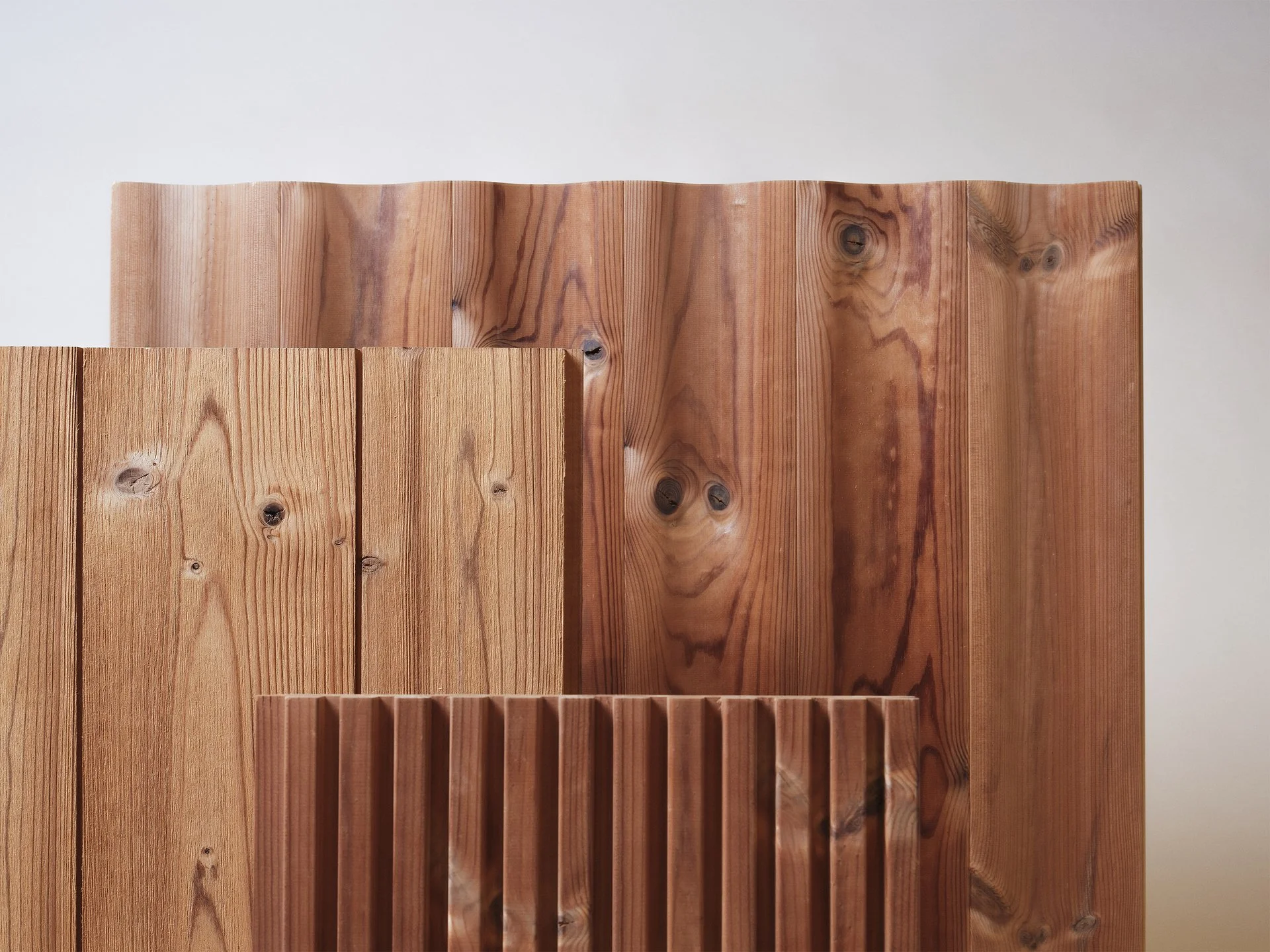
Photographer: Misa Kannos
What Is Thermal Modification?
Thermal modification is a controlled process in which timber is exposed to elevated temperatures under carefully managed conditions.
The objective isn't simply to dry the timber. The high-temperature process modifies the wood itself, changing the way it interacts with moisture and its surrounding environment.
For Lunawood's Thermo-D Nordic softwood, the ThermoWood® process reaches a maximum temperature of approximately 212°C. Following the process, the final moisture content of the product is approximately 4–7%.
These carefully controlled conditions are an important part of producing consistently high-quality thermally modified timber.
How Does Thermal Modification Change Timber?
Timber naturally absorbs and releases moisture from its surrounding environment. As this happens, the wood can expand and contract.
Thermal modification reduces the timber's tendency to take up moisture, helping to improve its dimensional stability.
During the ThermoWood® process, the high temperature causes chemical changes within the wood's cell-wall components. Hemicelluloses are the most sensitive to heat and undergo degradation, reducing the number of compounds in the wood that readily attract and hold moisture.
Cellulose is comparatively stable during the controlled treatment, allowing much of the wood's structural framework to remain intact, while lignin undergoes chemical changes that contribute to the modified wood structure.
Together, these changes reduce the wood's ability to absorb and retain moisture and make the timber a less favourable environment for decay fungi and other wood-damaging organisms.
This improved resistance to moisture and decay is an important reason why thermo-treated timber can provide better biological durability than untreated softwood.
However, thermal modification does not make timber completely immune to mould, rot or other damage. Correct installation, drainage, ventilation and exposure conditions remain important for any exterior timber application.
Why Is Dimensional Stability Important?
Wood is a natural material, and movement is a normal characteristic of timber.
When untreated timber is exposed to changing moisture conditions, it can swell and shrink. In outdoor applications, timber may experience repeated changes caused by humidity, rain and drying conditions.
Improved dimensional stability helps reduce the amount of movement associated with these moisture changes.
For applications such as timber decking, exterior cladding, pergolas, screening and architectural timber features, this can be particularly beneficial.
Instead of selecting timber based only on its appearance, architects, builders and homeowners can also consider how the timber will behave in the environment where it will be installed.
What Is Lunawood Thermo-D?
Lunawood Thermo-D is a thermally modified Nordic softwood product made primarily from pine and spruce and processed using the ThermoWood® method.
The "D" in Thermo-D refers to durability, with the treatment significantly improving both the durability and dimensional stability of the Nordic softwood.
For architects, designers, builders and homeowners, this makes Lunawood thermally modified timber an attractive option for projects where both appearance and performance are important.
It offers the warmth and character of genuine timber with characteristics that make it particularly well suited to modern exterior and interior architecture.
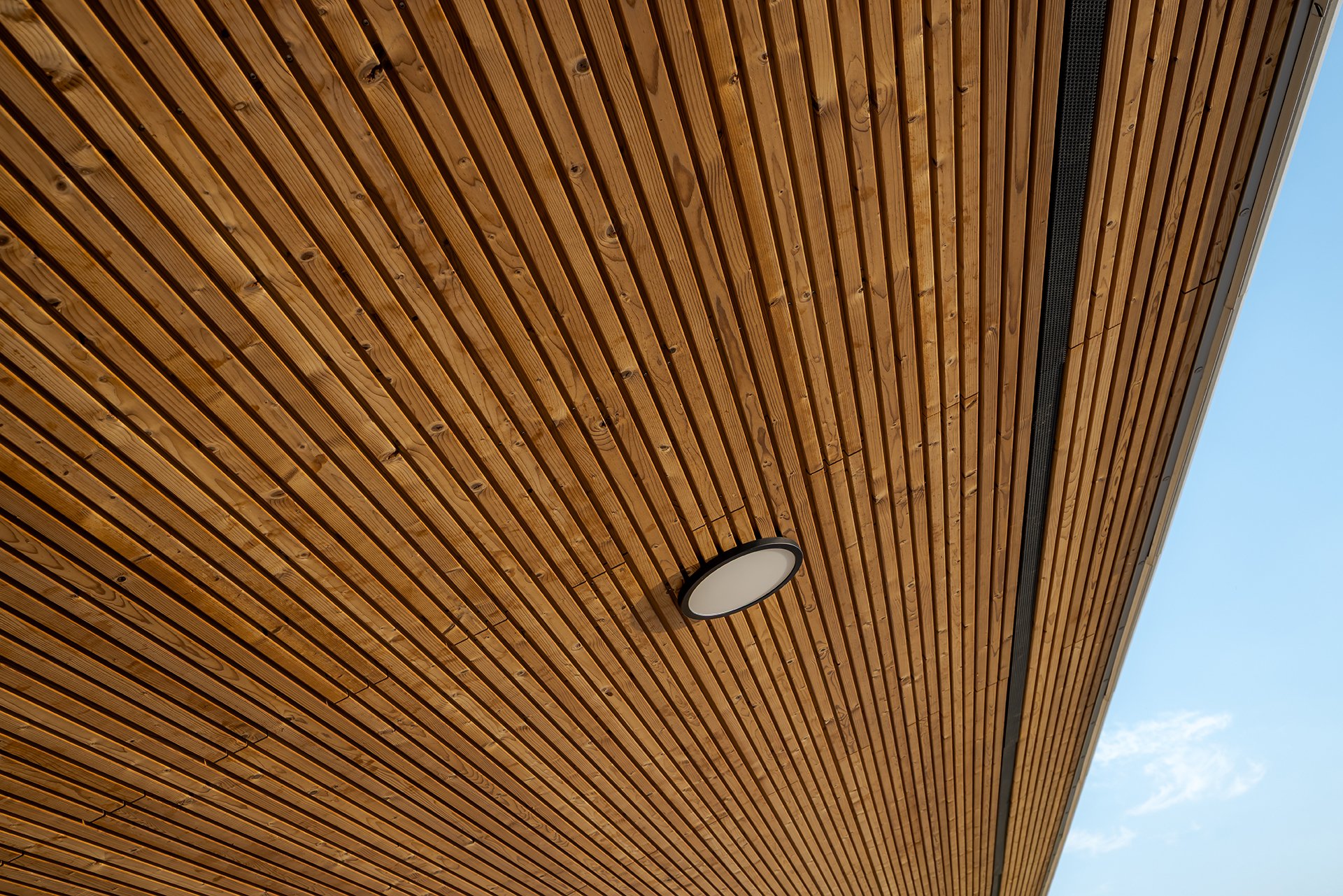
Architect: Dorn-Becker-Architekten, Photographer: Marcel Travels Photography
What Are the Benefits of Thermally Modified Timber?
There are several reasons why thermally modified wood has become an increasingly popular alternative for exterior timber applications.
Improved dimensional stability
The thermal modification process reduces the timber's moisture uptake and helps limit movement caused by changes in moisture content.
This makes dimensional stability one of the biggest advantages of ThermoWood timber, particularly in environments exposed to changing weather conditions.
Natural timber appearance
Unlike synthetic alternatives, thermally modified timber retains the natural appearance, texture and character of real wood.
This makes products such as Lunawood ThermoWood® particularly attractive for architectural projects where the natural look of timber is part of the design.
A controlled, chemical-free modification process
The ThermoWood® process is carefully controlled using heat and steam, without chemical preservatives being added during the modification process.
This allows the natural characteristics of the timber to be enhanced without relying on a traditional chemical preservation treatment.
Low final moisture content
Following processing, Lunawood Thermo-D has a final moisture content of approximately 4–7%, contributing to its improved dimensional stability.
Low-maintenance flexibility
Because ThermoWood® is produced without added chemical preservatives, the timber can be left untreated and allowed to weather naturally.
If left untreated outdoors, the original brown colour will gradually weather and change over time. Where the original colour is to be maintained, an appropriate timber surface treatment can be applied.
This gives architects and homeowners the choice between a naturally weathered appearance or maintaining the original timber colour through ongoing surface treatment.
Where Can Thermally Modified Timber Be Used?
With Lunawood producing a wide range of timber products and profiles, there are numerous possibilities for using thermally modified timber in residential, commercial and architectural projects.
As no chemical preservatives are added during the ThermoWood® modification process, Lunawood can be used for a wide variety of interior and exterior timber applications.
Common uses include:
Thermally modified timber decking
Pergolas
Exterior timber cladding and façades
Timber screens and privacy walls
Soffits
Interior timber finishes
Feature walls
Architectural timber features
Whether used as decking timber, cladding timber or a decorative architectural material, Lunawood provides the natural appearance of Nordic softwood with the performance benefits of thermal modification.
Why Is Thermally Modified Timber Becoming More Popular?
Modern construction and architecture increasingly require materials that combine performance, aesthetics, practicality and sustainability.
Thermally modified timber provides a way to use genuine wood while improving some of the characteristics that are particularly important in outdoor environments.
For architects and designers, it provides a natural material with a distinctive appearance and a wide range of architectural applications.
For builders and contractors, improved dimensional stability can be an important consideration when selecting timber for exterior installations.
For homeowners, thermally modified timber provides the opportunity to use genuine timber for decking, cladding and other outdoor applications while benefiting from the long-lasting characteristics of ThermoWood®.
For projects where appearance, longevity and performance all need to be considered, Lunawood Thermo-D provides a premium alternative to conventional exterior timber.
Is Thermally Modified Timber Good for Decking and Cladding?
Yes. Thermally modified timber is particularly well suited to decking, cladding and other above-ground exterior applications because thermal modification reduces moisture uptake and improves dimensional stability.
These properties can help timber cope better with the repeated moisture and drying cycles experienced in outdoor environments.
However, the performance and lifespan of any timber installation still depend on factors such as correct installation, drainage, ventilation, fixing methods and ongoing care.
Choosing the correct timber profile and installation method for the project is therefore just as important as selecting the material itself.
Choose Lunawood Thermally Modified Timber from Saplings Timber Trading
At Saplings Timber Trading, we supply a wide range of Lunawood thermally modified Nordic softwood for architects, designers, builders, contractors and homeowners looking for a premium timber solution for exterior and interior architectural applications.
Whether you're looking for thermally modified timber decking, timber cladding, pergolas, screens, soffits or architectural features, Lunawood offers a natural timber solution with improved dimensional stability and the premium appearance required for contemporary projects.
For customers searching for Lunawood in South Africa, thermally modified timber in South Africa or a premium exterior timber solution with long-term performance in mind, speak to the Saplings Timber Trading team.
Contact Saplings Timber Trading today for Lunawood availability, pricing and expert timber advice.
Written by Johan Olivier